

Meeting Overview
The Marfan Foundation is collaborating with the European Society of Cardiology’s Peripheral Artery and Aortic Disease Working Group, along with local hosts, Drs. Arturo Evangelista and Gisela Teixidó Turà, to present “Science in Spain.” This joint meeting brings together:
- The 12th International Symposium on Marfan, Loeys-Dietz, Vascular Ehlers-Danlos and Related Syndromes
- The Genetic Aortic Network and the European Society for Cardiology Aorta and Peripheral Vascular Disease Joint Session
The meeting will take place in Barcelona, Spain, from October 4–7, 2026.
Science in Spain advances our global mission to accelerate research and innovation in genetic aortic conditions. The meeting will convene leading scientists, clinicians, and researchers from around the world to share the latest discoveries, discuss clinical advances and controversies, foster collaboration, and explore new therapeutic approaches. This meeting has become the premier international meeting for thoracic aortic disease. The program will include two days of basic and translational research and two days focused on clinical management and registry studies.
The meeting welcomes scientists, clinicians, researchers, students, and postdoctoral fellows from all disciplines. Planned programming includes oral presentations, poster sessions, networking events, and small-group lunches with topic experts. Travel awards will be available for students, genetic counselors, and postdoctoral fellows based on abstract review.
October 4-5, 2026 12th International Symposium on Marfan, Loeys-Dietz, Vascular Ehlers-Danlos and Related Syndromes
October 6-7, 2026 Genetic Aortic Network and the European Society for Cardiology Aorta and Peripheral Vascular Disease Joint Session
Thank you to our Collaborators
Meeting Details
-
12th International Symposium on Marfan, Loeys-Dietz, Vascular Ehlers-Danlos and Related Syndromes (October 4-5)
The 12th International Symposium on Marfan, Loeys-Dietz (LDS), Vascular Ehlers-Danlos (VEDS) and Related Syndromes is a two-day meeting that features cutting-edge research and discussion across basic, translational, and clinical science. It brings together early-career and senior investigators to:
- Identify genes associated with disease-causing mutations
- Investigate the mechanisms by which mutations are translated into phenotype
- Recognize the broad clinical range of aneurysm-related syndromes
- Evaluate emerging and effective therapies
- Address key research and management issues across cardiology, surgery, orthopedics, genetics, and ophthalmology
- Review the latest research, risk assessment, treatment, and surgical updates specific to VEDS
Early-career investigators are encouraged to submit their research for review. Submissions that include state-of-the-art science will be selected for oral presentations, with additional work presented during daily poster sessions and networking opportunities. The preliminary program will be released following abstract selection.
Planning Committee
- Peter Byers, MD, University of Washington (Co-Chair)
- Bart Loeys, MD, PhD, University of Antwerp (Co-Chair)
- Hal Dietz, MD, Johns Hopkins University (Co-Chair)
- Catherine Boileau, PharmD, PhD, Hôpital Bichat
- Gustavo Egea, PhD, University of Barcelona
- Arturo Evanglelista, MD, PhD, Hospital Vall Hebrón
- Alberto Forteza, MD, Quirónsalud Madrid Hospital and the La Luz University Hospital
- Jared Griffin, Annabelle’s Challenge
- Josephine Grima, PhD, The Marfan Foundation
- Xavier Jeunemaitre, MD, PhD, Centre de Recherche Hôpital European Georges-Pompidou
- Marlies Kempers, MD, PhD, Radboudumc
- Mark Lindsay, MD, PhD, Massachusetts General Hospital
- Lauren May, MPH, The Marfan Foundation
- Gretchen MacCarrick, MS, CGC, Johns Hopkins University
- Gisela Teixidó Turà, MD, PhD, Hospital Vall Hebrón
- Lynn Sakai, PhD, Oregon Health & Science University
- Fleur S. van Dijk, MD, PhD, London Northwest University Healthcare
- Tony Yasick, MD, DEFY Foundation
- Maya Brown Zimmerman, MPH, CGC, Norton Healthcare
-
Genetic Aortic Network and the European Society for Cardiology Aorta and Peripheral Vascular Disease Joint Session (October 6-7)
This meeting focuses on clinical science in the field of genetically triggered thoracic aortic aneurysms, with the goal of enhancing collaboration, discussing gaps in knowledge, debating challenges and controversies, and sharing cutting-edge science. Session topics include:
- Maternal & Aortic Health: Insights into Pregnancy in HTAD
- Acute Aortic Syndrome Management
- Imaging and Engineering Frontiers
- Emergency Department Management of Acute Aortic Dissection
- AI Applications: From Genes to Populations
- Insights from Registries: Research To Improve Clinical Outcomes
- Thrivorship – Incorporating Exercise and Improving Mental Health
- Advances in Surgical Management
- Pediatric Aortopathy Management
Specific learning objectives are to:
- Evaluate and apply current international guideline recommendations (ESC and ACC/AHA) for the diagnosis, surveillance, and management of genetically triggered thoracic aortic disease, including areas of controversy and unmet clinical need.
- Integrate registry-based and real-world evidence to improve risk stratification, timing of intervention, and medical management across diverse populations and genetic subtypes of aortic disease.
- Utilize advanced imaging, biomechanical, and computational approaches to enhance the prediction of aortic growth, dissection risk, and patient-specific procedural planning.
- Assess emerging artificial intelligence and digital health technologies for aortic disease detection, progression modeling, and personalized clinical decision-making.
- Apply evidence-based strategies for acute aortic syndrome management and surgical intervention, including open, hybrid, and endovascular approaches, across adult and pediatric populations.
- Incorporate survivorship, quality-of-life, and lifespan considerations—including pregnancy, exercise, mental health, and transition of care—into comprehensive management of patients with genetic aortic disease.
Preliminary agenda and speakers can be found here.
Planning Committee:
- Julie De Backer, MD, PhD, Ghent University (Co-Chair)
- Shaine Morris, MD, MPH, Texas Children’s Hospital (Co-Chair)
- Kim Eagle, MD, University of Michigan (Co-Chair)
- Alan Braverman, MD, Washington University
- Arturo Evanglelista, MD, PhD, Hospital Vall Hebrón
- Josephine Grima, PhD, The Marfan Foundation
- Marion Hofmann Bowman, MD, University of Michigan
- Kathyrn Holmes, MD, Oregon Health & Science University
- Guillaume Jondeau, MD, PhD, Hôpital Bichat
- Lauren May, MPH, The Marfan Foundation
- Dianna Milewicz, MD, PhD, University of Texas at Houston
- Gisela Teixidó Turà, MD, Hospital Vall Hebrón
- José F. Rodríguez Palomares, MD, PhD, Hospital Vall Hebrón
Important Dates & Deadlines
| May 15, 2026 | Abstract Submission Deadline |
| July 1, 2026 | Abstract Presentation Notification |
| July 31, 2026 | Early Registration Deadline |
| August 31, 2026 | Hotel Reservation Deadline |
Fees & Registration
-

Early Registration
$599 USD when you register March 1 – July 31, 2026 for the full conference (4 days).
-
Late Registration
$650 USD when you register August 1 – Sept 30, 2026 for the full conference (4 days).
-

Students, Fellows, Postdocs, Genetic Counselors & VHO Leaders
$400 USD when you register March 1 – Sept 30, 2026 as a student, fellow, postdoc, genetic counselor, or volunteer health organization (VHO) leader for the full conference (4 days).
-

An Evening of Connection & Collaboration (includes dinner) at El Xalet de Montjuïc on October 5
$125 USD Join colleagues for dinner and an evening of connection and collaboration on October 5, 2026, at El Xalet de Montjuïc. This event is open to all meeting attendees and their guests. Advance ticket purchase is required.
Hotel & Travel
Science in Paris will take place at:
Meliá Barcelona Sarrià
Avinguda de Sarrià,
50 Barcelona
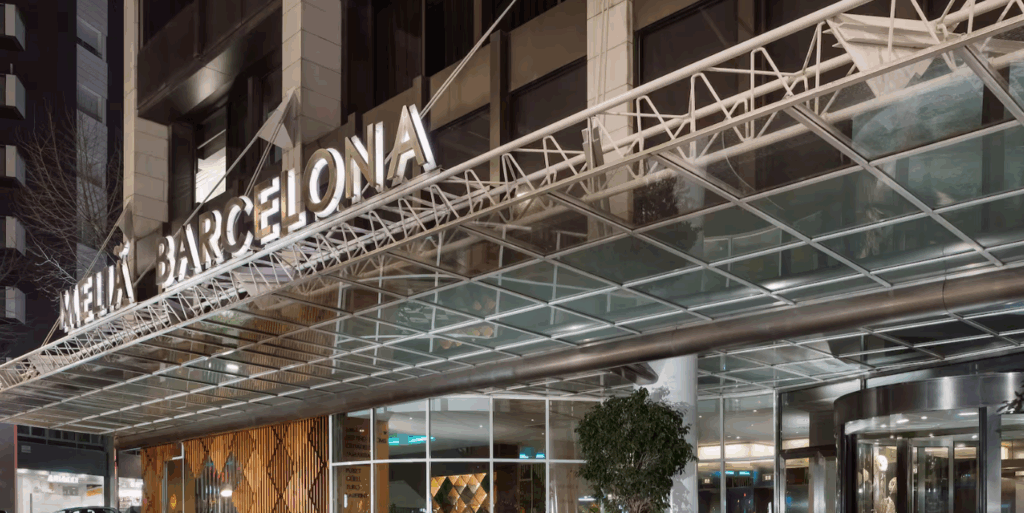
This cosmopolitan and sophisticated hotel in Barcelona is the ideal choice for both cultural travelers and business trips. Located in the heart of the Corts district, a few steps from the iconic Avenida Diagonal, Meliá Barcelona Sarrià is surrounded by shops, leisure activities, and attractions. Enjoy the proximity to the works of Gaudí, the iconic Camp Nou stadium, and everything Barcelona has to offer. The hotel also offers unique services such as the Serena Spa, exquisite cuisine at the Prezzemolo restaurant, and exclusive The Level services, designed for travelers seeking a touch of class in every detail.
The distance from Barcelona Airport (Barcelona-El Prat, BCN) to the Meliá Sarrià Barcelona hotel is approximately 16 km (9.3 miles). Taxis and Uber are readily available at the airport and are a convenient option, costing around €30-35 for the journey. While not as direct, the train and airport shuttles are also available.
The cost of accommodation is 262€ for single occupancy and 282€ for double occupancy and includes breakfast. Check-in is at 3:00 p.m. on the day of arrival, and check-out is before 12:00 p.m. on the day of departure. Hotel reservations must be made by August 31, 2026, to secure the group rate. Discounted rooms are subject to availability. Individual reservations can be cancelled up to 14 days before arrival.
Abstract Submissions
All abstracts submitted for Science in Spain will be included in a poster session, subject to space availability. A select number of submissions, based on review committee ratings, will be chosen for oral presentations.
We welcome abstracts across basic, translational, clinical, and surgical research in any of the suggested topics below.
-
Molecular Pathogenesis
- Mechanistic insights into aortic aneurysm development, dissection, and systemic manifestations
- Cross-talk between cellular pathways influencing disease progression
- Advances in mechano-signaling, mechano-sensing, and transduction in aortopathies
- Potential of therapeutic targets for Marfan, LDS, and VEDS
-
Genetic, Epigenetic, and Environmental Modifiers of Phenotypic Variability
- Genetic modifiers influencing clinical outcomes and systemic feature expression
- Epigenetic contributions to disease variability and environmental interactions
- Impact of sex, pregnancy, and lactation on disease progression
- Role of circadian rhythm, exercise, and environmental factors on disease outcome
-
Lessons from Animal Models and New Model Systems
- Strengths, weaknesses, and translational potential of current animal models
- Application of zebrafish, iPSC-derived models, and organ-on-a-chip technology
- CRISPR-Cas9 and genome-editing advancements in aortopathy research
- Comparative insights from mouse, zebrafish, and other models
- Single-cell sequencing for identifying cellular heterogeneity in vascular disease
-
Advances in Imaging, Biomarkers and Diagnostic Technologies
- Novel imaging technologies for early aortic disease detection
- AI-driven analysis of biomechanical and flow dynamic parameters
- Emerging biomarkers for risk assessment and therapeutic response monitoring
- Imaging and risk assessment methodologies for Type B Dissection
- Insights from AI, deep learning, and computational modeling in disease prediction
-
Genotype-Phenotype Correlation and Clinical Stratification
- Novel genotype-phenotype correlations and their predictive value
- Clinical decision-making based on genetic risk stratification
- Outcomes and insights from databases for genotype-phenotype research
- Importance of personalized medicine
-
Ocular, Orthopedic, & Pulmonary Underpinnings & Associated Risk
- Genetic underpinnings of ocular features
- Advances in intraocular surgery and lens implant safety
- Implications of familial ectopia lentis syndromes for aortic risk assessment
- Mechanisms underlying orthopedic and pulmonary involvement
- Innovations in management of dural ectasia and skeletal manifestations
- Updates on pulmonary function, sleep apnea, and respiratory complications
-
Advances in Aortic Interventions and Surgical Approaches
- Long-term outcomes of medical and surgical management
- Advances in valve-sparing techniques and emerging endovascular solutions
- Advances and outcomes utilizing PEARS
-
Insights into Mitral Valve, Myocardial, and Arrhythmogenic Disease
- Outcomes of mitral valve repair vs. replacement
- Clinical implications of myocardial and arrhythmic involvement
- Role of shared decision-making in surgical planning
-
Clinical Implementation, Care Delivery, and Health Systems Innovation
- Innovative models for genetic testing, counseling, and longitudinal follow-up
- Outcomes of multidisciplinary and hybrid care models (in-person, telehealth, shared care)
- Real-world evidence from clinical registries and testing cohorts
- Integration of genetics into cardiology, surgery, obstetrics, and primary care
- Barriers and facilitators to equitable access across health systems
-
Holistic and Medical Management of Pain and Quality of Life
- Current approaches for headache, migraine, and chronic pain
- Incorporation of mental health therapies for increased quality of life
- Outcomes of exercise, rehabilitation, and physical therapy
- Insights on cardiac rehabilitation in post-aortic dissection patients
Please use the following guidelines when submitting abstracts to be reviewed for Science in Spain:
- Abstracts must be submitted electronically by May 15, 2026.
- Abstract must be written in English.
- The names of the authors should be listed in the following order: Last name, first name, degree, department, institution, city, state, and country.
- The presenting author’s name should be underlined.
- The abstract should be a maximum of 300 words and include the following sections: introduction, objectives, materials and methods, results, and conclusion.
- Please use 12 pt. Arial, single spaced, and 1” margins.
- Abstracts must be only one page (8.5 inches x 11 inches) and have no diagrams.
- There is no limit to the number of abstracts a presenter can submit.
- All authors will receive notification by July 1, 2026 for oral or poster presentation.