
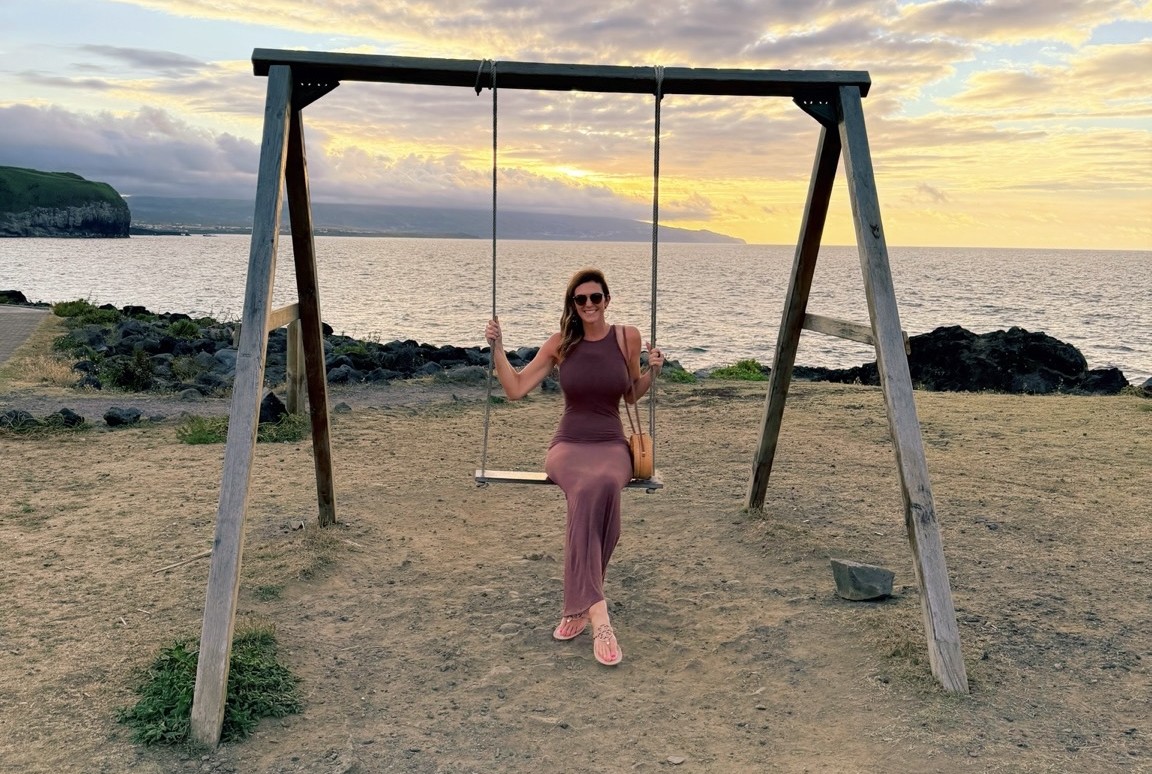
Summer McKesson’s compelling story recently put Marfan in the news with multiple national outlets covering her remarkable diagnosis amid learning of the decades-old fertility fraud that had shaped her genetics. Summer shared her experiences with Olivia Abel, Director Integrated Marketing Communications, the Marfan Foundation to help advance awareness within the larger Marfan syndrome community.
In 2016 Summer McKesson started having trouble breathing. “I’ve played basketball my whole life and I was used to running four or five miles at a time. But suddenly, I couldn’t run 30 seconds without gasping for air,” she recalls.
Then in her mid-30s, Summer assumed her sinuses were the culprit – and forged ahead with several surgeries and procedures. But nothing worked. “It was during Covid when my doctor said that I’d better see a pulmonologist. They immediately found blood clots in my lungs, and one in my heart. They would have to be removed or they could eventually lead to heart failure.”
Blood thinners were prescribed and Summer thought that – finally – she could get her active life back on track. But instead, it was just the beginning of a years-long odyssey of medical mysteries, family secrets, and the ultimate discovery of two rare genetic disorders, including Marfan syndrome. Along the way, she also learned shocking truths that turned her world – and her entire identity – upside down.
“He realized my tissue was very stretchy.”
Six months after starting on blood thinners, Summer’s breathing had not improved. A diagnosis of CTEPH (Chronic Thromboembolic Pulmonary Hypertension) and open heart surgery at UC San Diego followed. Summer felt lucky to be under the care of Dr. Michael Madani, MD, FACS. “He’s the best in the country,” she said. But their connection proved even more fortuitous than she first imagined. “During the operation he realized my tissue was very stretchy, very weird. He also noted that I had some Marfan characteristics. I’m very tall, 6’2”, so he told me that I should get tested for connective tissue disorders.”
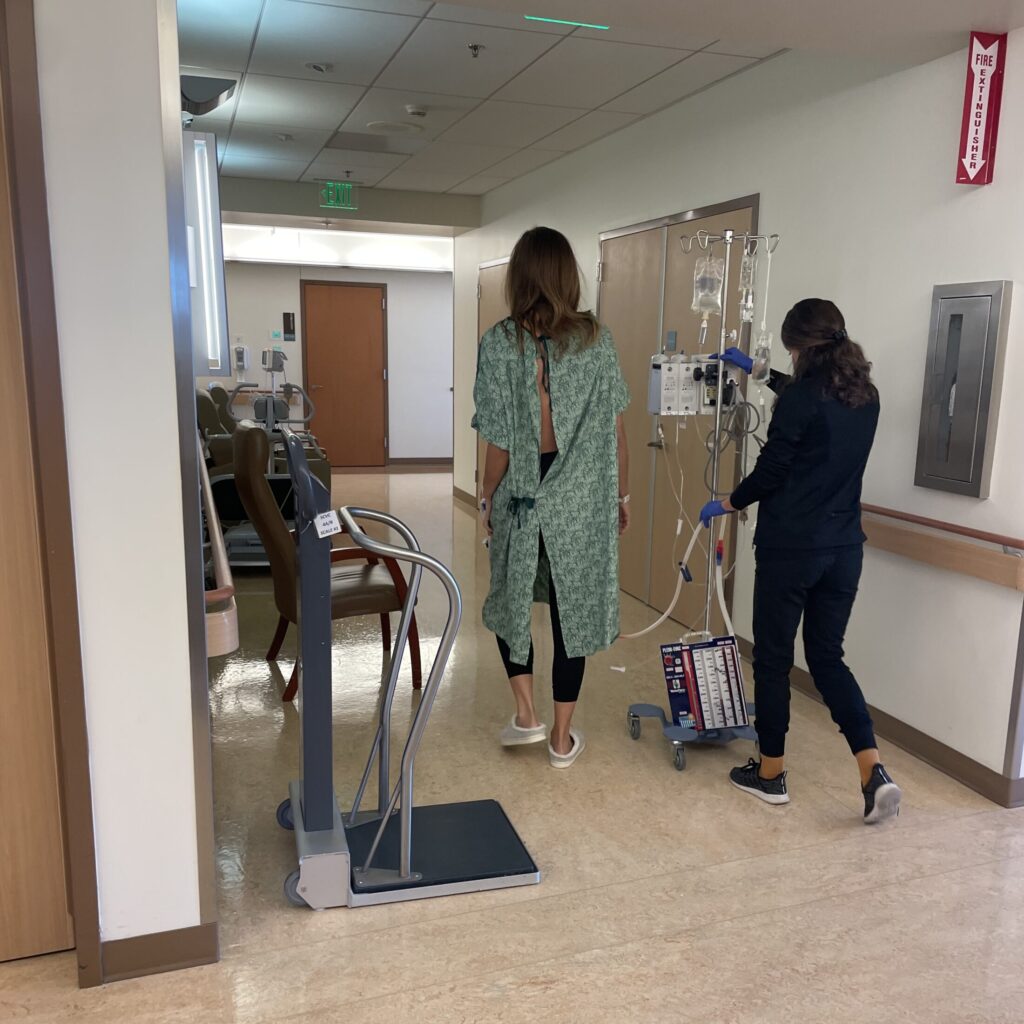
But before she could get a genetic test, the blood clots started again. Summer sought help at the Mayo Clinic, but the doctors there were completely baffled.
“They had never seen a case like this before, where no matter how many different blood thinners they tried, I just kept clotting. Eventually, they took a chance and put me on Plavix and Lovenox together. Since then I have not had a clot, which is amazing.”
But the next medical mystery soon unfolded: a genetic test confirmed Marfan syndrome. “They saw that my aortic root was already measuring around 4.4 to 4.5, so I’m right on the cusp of having to start considering surgery in the next year or two,” she says. A slew of testing, including eye checkups and skeletal imaging, kept her busy, but the thing that upset Summer the most was the long list of necessary lifestyle changes.
“Being active is such a huge part of my life. Now I have to think about what I can lift and about not getting my heart rate up. I had already lost so much over the past few years, so this was really tough to navigate.”
Genetic Testing Reveals Life-Changing Surprise
Summer struggled to accept that she had two rare – but seemingly unrelated – medical conditions. Despite extensive testing, doctors couldn’t find a specific clotting disorder, but felt that both of Summer’s conditions were hereditary.
Summer was befuddled – she couldn’t identify one relative with similar conditions. She turned to 23andMe genetic testing. “I thought that even if I learned the littlest bit of information it would be worth it,” she says.
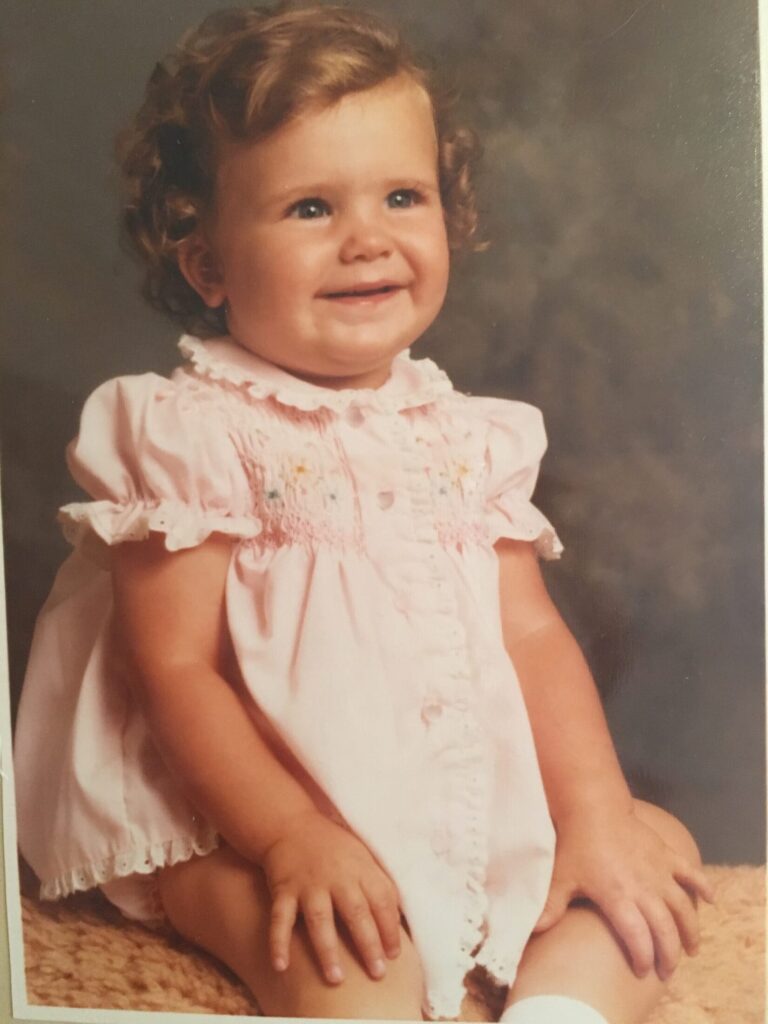
The results yielded no helpful health insights. But they did uncover a big, life-changing surprise: Summer had seven half siblings. “At first, I was just confused. I thought maybe my dad had another family that I didn’t know about. Or that I was actually adopted. Or that maybe DNA tests are sometimes wrong.”
The truth, which unfolded over the next month, was much more complex.
Unbeknownst to Summer, decades earlier her parents had gone to a fertility clinic at Duke University Hospital because they had struggled to grow their family. Summer was conceived via artificial insemination. The couple were told that the sperm was anonymously donated by a medical student.
But after messaging with some of her new half siblings in the fall of 2023, Summer learned a shocking secret. Her mother’s fertility doctor, Charles Peete, MD, had secretly used his own sperm to impregnate multiple clients. Summer’s mother was one of them. “The week that I found out I was so nauseous; I couldn’t eat a thing. The first couple of months I lost a lot of weight—the shock, the anxiety of what was going to happen,” says Summer.
Summer says that dealing with the unfolding “layers of trauma” has been surreal. First, the discovery that her father, who had, coincidentally, died of an aortic aneurysm in his 40s when Summer was a teenager, was not her biological dad. “When all of this came out, it made sense to me in some ways. Growing up, I always felt like the black sheep of the family. I felt different and I looked different. My complexion was different. No one had my nose. I was taller than everyone. I just felt out of place. I also didn’t have the best relationship with my dad, and maybe this had something to do with it.”
Coping with the fact that she was conceived via “fertility fraud” was also difficult to comprehend. “I am the product of a crime,” she says.
Since these revelations, Summer’s life has been “a whirlwind.” Multiple media outlets, have jumped on the story and Summer’s emotional first meeting with half-brother Jim Harris was captured on a CNN video. While Summer has struck up spirited conversations with many of her newly found half siblings, Harris remains the only one she has met in person – and the only one who has undergone genetic testing. He does not have Marfan syndrome. Summer hopes that ultimately all her half-siblings will undergo genetic testing. “They’ve all been so kind and supportive. But we’re going to have more siblings show up. I want to be able to support them. Some of them could have my health issues. I want to be able to help them through that,” she says.
Finding balance
The Marfan diagnosis has made Summer think intently about her past – and her future. Doctors have advised that the combination of her two conditions would make it dangerous in her particular case to have her own child, so she has frozen several eggs.
“If I had known earlier, I probably would have never been allowed to play basketball, so my entire life would have looked different. I’d probably have a different career path,” she says, noting that her “endless” injuries and three ankle surgeries while on the basketball team at Western Carolina University were almost certainly due to connective tissue issues. “I probably was on crutches more than I was off of them in college. At the time, I just thought I was unlucky,” she says.
These days, Summer tries to balance “regular life” with her new reality. She’s grateful to have her longtime “very supportive” job designing March Madness APPs, and is planning on increasing her annual travels as there is “no point in waiting.” She also takes an annual trip to the Mayo Clinic, where she will eventually have aortic surgery. “I still work out, but I’ve had to change what that looks like,” she says. “I now have a watch that vibrates if my heart rate hits a certain limit to let me know that I need to slow down.”
Summer also struggles with anxiety.
That’s no surprise, according to Andrea Friedman, Director of Community Programs at the Marfan Foundation. “Summer basically had the rug pulled out from underneath her. Of course she’s anxious,” she says. “She’s trying to regain a sense of control and doing a good job by educating herself and also by prioritizing self-care.”
Andrea notes that for some people, getting a diagnosis is a relief. “It’s like finding a puzzle piece that’s been missing your whole life. Lots of things start to make sense. But whether it’s a relief or not, there’s usually a big sense of grief and loss, too,” she says.
When someone is the only known person in their family to have Marfan, like Summer, “It can be particularly overwhelming and isolating,” says Andrea. “So it’s really important to connect with others, to ask questions and to realize you’re not alone.”
The Marfan Foundation can help newly diagnosed individuals’ seeking support
The Foundation offers multiple support groups. “There’s nothing like talking to others who really get it. It’s very validating. Marfan syndrome affects people in such different ways, but there’s that commonality and a true sense of understanding,” Andrea says. “In one of the virtual groups, a “regular” told me: ‘I can just sit here and not say one word and it’s still amazing.’”
People living with Marfan syndrome and related conditions often report that volunteering or getting involved with a Walk for Victory event is an important part of their self-care. “Taking positive actions can help channel these tough emotions and give you a real sense of purpose,” says Andrea. “It’s also a reminder that while there are some things you can’t do anymore, there are many, many things you can still do.”
Summer remains grateful for the serendipitous Marfan discovery and looks forward to connecting with the Foundation community in the near future. “Because I was so healthy in every other way, I would never have known about Marfan and I probably would have had an aortic dissection at some point and that would have been it,” she says. “So I feel like it was all meant to be. I’m supposed to be here so I can share my story and help others.”
Want to learn more about genetic testing and Marfan syndrome? We can help:
Download: Genetic Testing and Marfan Syndrome – Marfan Foundation
Sign up for our upcoming webinar: Choosing the Right Genetic Testing for Marfan, LDS, VEDS, and Stickler – Marfan Foundation
Ask the Help & Resource Center: www.marfan.org/ask

The Marfan Foundation drives research, education and support – and builds community – to improve outcomes, save lives and empower all people to thrive who are living with Marfan, Loeys-Dietz, Vascular Ehlers-Danlos syndromes, and related genetic aortic and vascular conditions.