
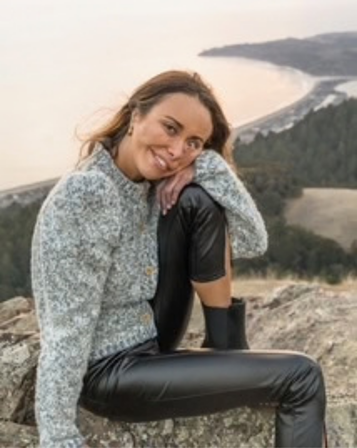
“Bella had a way of making people feel as though they were the only person in the world when she was talking to them,” said her dad, Peter Welch.
She was deeply sensitive and caring, a careful listener with a terrific sense of humor. She loved her family, adored children and found joy in sunsets, music, walks in nature, and time on the beach with her dog, Max.
Bella believed in living life fully, affirmed by her motto, “You have to risk it for the biscuit.”
It was more than a favorite phrase. For Bella, it became a way of approaching a life that often presented extraordinary challenges.
Growing Up with Visible Differences
Bella’s medical journey began at birth. Born with a rare Tessier 4 facial cleft, she underwent her first reconstructive surgery at three months old and would have 23 facial surgeries by the time she was 18. Despite her medical challenges, her family remembered a funny, fearless girl who wanted to be in the middle of everything.
“Given her facial differences, Bella had a way to both disarm and connect with those around her through grace and compassion to ease the anxiety in others when meeting strangers,” said her mom, Cherie.
Bella’s family was supportive and protective, but at home she wasn’t treated any differently or given any special privileges.
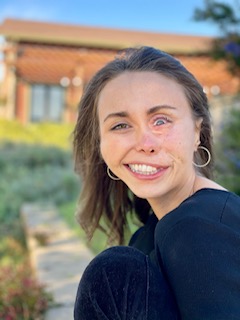
“The coveted front seat of the car was always reserved for the oldest sibling—me—so as the youngest of four girls, Bella was inevitably relegated to the dreaded middle seat,” her sister Rose remembered.
Those ordinary sibling dynamics were simply part of growing up together as a family.
But outside the safety of home, being visibly different could be painful.
“When we were together in public and people stared or made hurtful remarks, we would often feel angry and want to confront or shame them,” said Bella’s sister Maia. “But she would look directly at them and smile with a gentle invitation into connection. She showed up in the world as an example of what she hoped for, even when faced with the opposite by strangers.”
Her own experiences also gave her an early desire to help others. As a high school student, Bella joined Operation Smile for a medical mission to Vietnam, where she supported children undergoing cleft repair and their families. Years later, she connected with a family in Turkey whose child had a facial cleft similar to hers. For the first time, Bella saw a child who looked as she had as a little girl. She reached out to the parents, sharing experiences and hope about the road ahead.
Helping people who felt different, misunderstood, or alone would become an increasingly important part of Bella’s life.
A New Diagnosis
At 18, her medical condition changed dramatically.
After a minor car accident, severe migraines led to a CT scan that revealed a carotid artery dissection. From there, other dissections were identified, and genetic testing ultimately led to a diagnosis of Vascular Ehlers-Danlos syndrome (VEDS).
Bella had spent much of her childhood enduring surgeries with the hope that life would become easier. Instead, at the beginning of adulthood, she was confronting a condition without a cure and with risks and limitations largely invisible to those around her. Still, she was determined to move forward with the life she had envisioned, leaving home to attend the University of Hawaiʻi at Mānoa.
“It took tremendous courage for her to go off to college 3,000 miles from home knowing she was facing this new diagnosis,” said Peter. “It was a really important milestone in her life and one that we are extremely proud of.”
Becoming Her Own Advocate
“She had to immediately modify her lifestyle, navigate limitations, and live with an awareness of risk that most people never have to consider,” recalled Bella’s sister Naomi. “However, she was still determined to embrace life, savor joy, and remain open to meaningful experiences while also accepting the realities of life with VEDS.”
Those realities demanded an enormous amount of Bella’s time and attention. VEDS-related symptoms led to medical interventions, hospital stays, surgeries, and ongoing treatments. The condition also affected her ability to work consistently and required her to make ongoing accommodations in her daily life.

Bella responded by learning as much about VEDS as possible. She immersed herself in research, connected with others through the VEDS Movement, sought out VEDS expertise, and became a fierce advocate for herself and an active participant in decisions about her care.
“She came to realize that her full-time job was simply managing VEDS to allow her to live her best life,” said Peter.
But managing VEDS was not how Bella wanted to define her life.
“After learning she had VEDS, Bella became deeply intentional about how she lived her life,” Peter said. “She focused on strengthening what was within her control: her body, her relationships, and her ability to connect with and contribute to the world around her. She invested in her community, cultivated meaningful friendships, and worked to develop a voice she could share with a broader audience.”
Turning Experience into Purpose
Bella spoke openly about disability and chronic illness, including experiences that were not always easy to discuss. She wanted people to understand that disability did not mean inability.
Most of all, Bella wanted people who felt “othered” to have a voice. Her family believes advocacy became a calling for her because she understood firsthand the distance that can exist between what someone is experiencing and what the outside world sees.
She also understood loneliness.
Even surrounded by people who loved her, there were aspects of living with VEDS that no one without it could fully understand—the calculations, fears, physical limitations, and constant awareness of her body’s vulnerability.
By talking about those realities, Bella hoped someone else might feel less alone.
A Legacy That Continues
Bella passed away on December 30, 2025, at the age of 30 from complications of VEDS.
Her absence has left an immeasurable space in the family. Peter describes Bella as “the soul of our unit.”
But the lessons Bella taught them remain: Be compassionate. Understand people’s differences. Don’t sweat the small stuff. Enjoy the simple things in life. Be authentic. Take time to laugh. And risk it for the biscuit.
Following Bella’s passing, her family chose to honor her through generous gifts to the Marfan Foundation’s VEDS Movement totaling $255,000, with a focus on advancing VEDS research. The gifts from her aunt and uncle, Kate and Peter Mangan, and her father, Peter Welch, were made in Bella’s name, establishing The Isabella Noelani Parson Welch Memorial Grant for VEDS Research. The gift will fund two research grants of $125,000 each, awarded over two years, and support VEDS Movement programming.
For Kate and Peter Mangan, the gift was a way to honor not only Bella, but the family who loved her.
“Bella was a beautiful and courageous person. A true inspiration,” said Kate. “We wanted to do something to honor Bella, her parents, sisters, and everyone who loved her so much. Our hope is that VEDS research will help other people with VEDS.”
Bella’s father shared that same hope for the future. “Given Bella’s desire to understand the most she could about VEDS to improve her quality of life, we felt it important to contribute to the VEDS Movement and advance further research in the hopes that continued advancements in science and technology might allow others to benefit in the future,” Peter said.
The grants will help further VEDS research and support programming, carrying forward Bella’s own determination to understand her condition and her desire to improve life for others. For her family, supporting research is also an investment in a future in which scientific advances may give people with VEDS options that were not available to Bella.
“Our hope is that Bella’s legacy can provide some love and compassion for those living with VEDS and that they can have a meaningful life despite the debilitating effects this condition can have,” said Bella’s father, Peter.
The Isabella Noelani Parson Welch Memorial Grant for VEDS Research
Bella, remembered by her family for finding joy in nature, music, and time with the people she loved. The generous gift from Bella’s family will fund two research grants of $125,000 each. Each is a two-year award ($62,500 per year) supporting innovative basic, translational, or clinical research focused specifically on VEDS. Awards are based on proposal evaluation by the Marfan Foundation’s Scientific Advisory Board and the approval of its Board of Directors.
Application deadline: January 25, 2027 | Awards announced: June 18, 2027 | Funding available: July 1, 2027
Learn More & Apply
Full details, guidelines, and the application can be found at the links below.

The Marfan Foundation drives research, education and support – and builds community – to improve outcomes, save lives and empower all people to thrive who are living with Marfan, Loeys-Dietz, Vascular Ehlers-Danlos syndromes, and related genetic aortic and vascular conditions.