
In this briefing:
- Protecting the aorta and arteries
- Beyond the aorta
- Quality of life
Thanks to the generosity of our community, the Marfan Foundation is able to power world-class research and convene scientists to move us toward new breakthroughs, better treatments and hope for a brighter future.
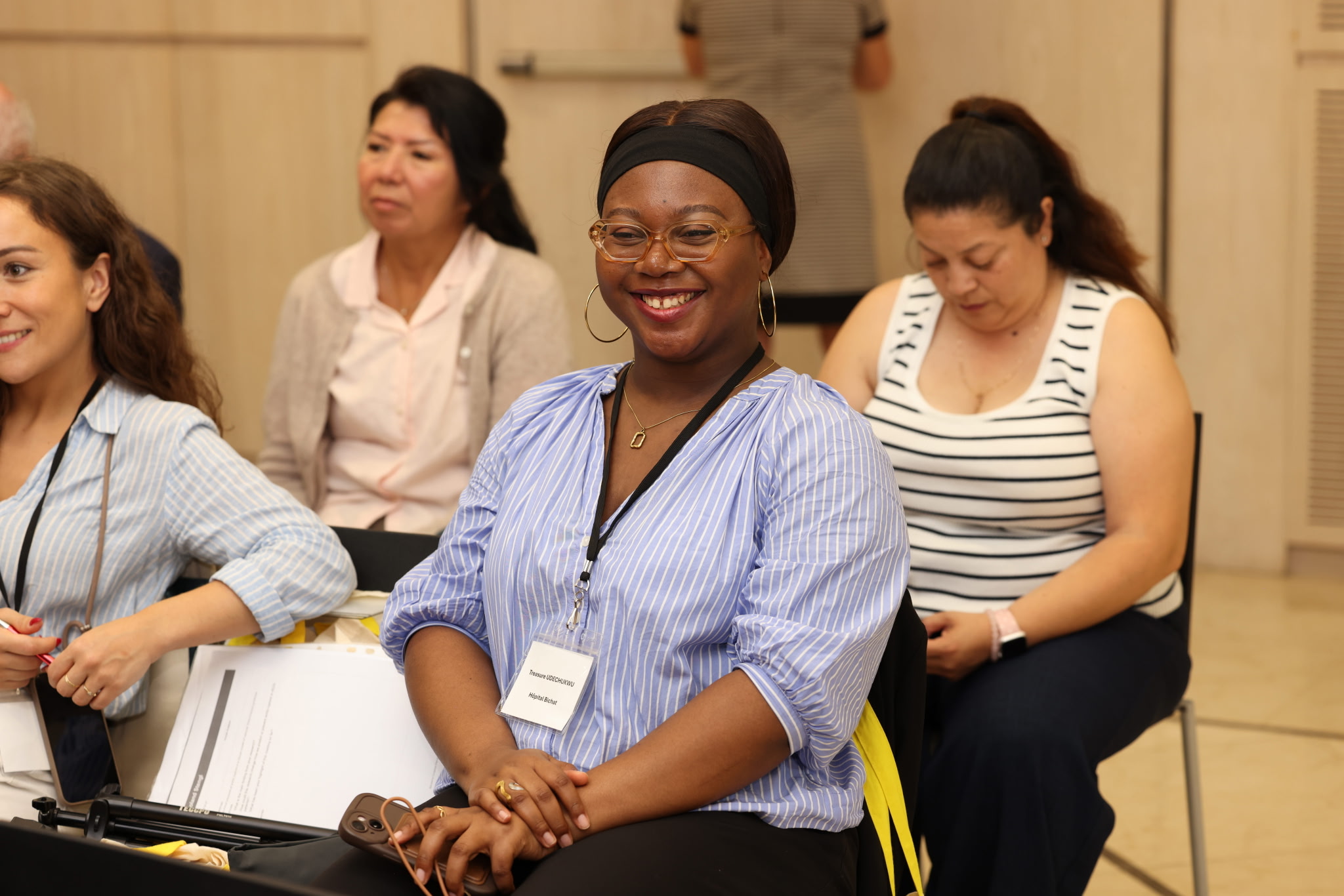
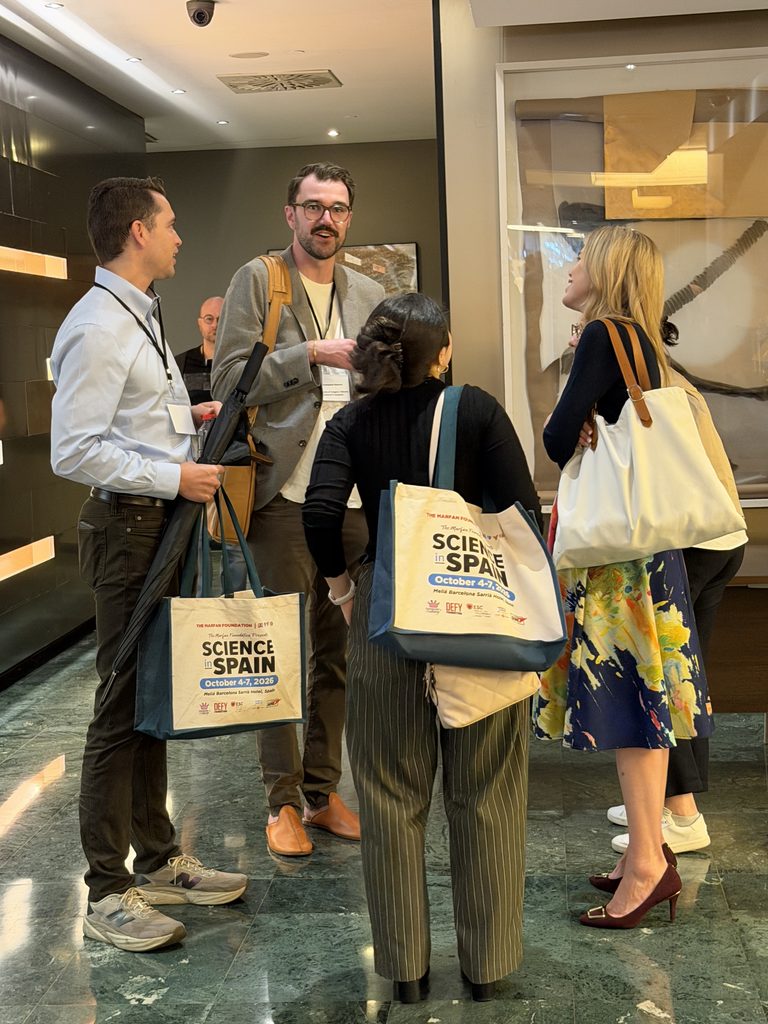
On October 4 – 5, the Marfan Foundation’s 12th International Symposium on Marfan, Loeys-Dietz, Vascular Ehlers-Danlos and Related Syndromes brought together scientists from around the world at a meeting in Barcelona, Spain to share what they are learning about VEDS, Loeys-Dietz syndrome, Marfan syndrome and related conditions.
The symposium is part of Science in Spain: the largest global scientific gathering in the Marfan Foundation’s 45-year history, with close to 300 registrants from 23 countries.
The goal: key learnings that ultimately improve care for real people.
International Symposium Research:
First Look
Protecting the aorta and arteries
Clearing worn-out cells in Loeys-Dietz syndrome
Research presented by Elena MacFarlane, Johns Hopkins School of Medicine
In mice with Loeys-Dietz syndrome, worn-out cells built up in the aorta.
A treatment designed to clear those cells made the aorta smaller.
We’re discovering a possible new treatment approach for LDS, one researchers can now study further.
What happens before a dissection
Research presented by Hiromi Yanagisawa, University of Tsukuba
In mice that develop aortic dissection, researchers found changes in the inner lining of the aorta before a tear formed.
We’re uncovering what may set off an aortic dissection, raising new questions for researchers to pursue.
An antibiotic under study
Research presented by Scott LeMaire, Geisinger College of Health Sciences
In mice with VEDS, a common antibiotic called ciprofloxacin led to tears in the arteries.
We’re gaining insight into how certain medicines may affect the arteries in VEDS, adding to a growing body of VEDS research.
A closer look at procedures in VEDS
Research presented by Sherene Shalhub on behalf of Tiffany Lian, Oregon Health & Science University
Some people with VEDS need procedures done through an artery in the leg. In a study of people with VEDS who had these procedures, there were no major complications at the entry site when doctors used smaller tools.
We’re learning more about how these procedures are approached in VEDS, drawing on more than 30 years of patient data.
A potential vaccine approach
Research presented by Shun Okamura
In Marfan mice, a vaccine targeting TGF-β, which earlier studies linked to aneurysm formation, slowed enlargement of the ascending aorta.
We’re understanding more about a possible new strategy for slowing aortic aneurysm growth in Marfan syndrome.
A medicine that targets oxidative stress, potentially slowing aneurysm growth
Research presented by Rodrigo Barbosa de Souza
A medicine called allopurinol targets oxidative stress, which is involved in aneurysm growth. In mice that already had an enlarged aorta, more of the treated mice survived, and in males the size of the aortic root held steady.
We’re learning more about whether reducing oxidative stress could help limit heart and aorta changes in Marfan syndrome, and why results can differ between males and females.

Beyond the aorta: Looking at the whole body
A closer look at the lungs
Research presented by Giovanna Reche Salmazo, Faculdade Santa Marcelina
Mice with Marfan syndrome had changes in their lungs. Two common blood pressure medicines, losartan and ramipril, helped some lung tissue but did not reverse those changes.
We’re seeing more clearly how Marfan syndrome can affect the lungs.
Later this week: Studies on the heart muscle and heart rhythm in children with genetic aortic conditions.

Quality of life
Understanding pain
Research by Francesc Jiménez-Altayó, Autonomous University of Barcelona
In mice with Marfan syndrome, the nervous system became more sensitive to pain over time.
We’re learning more about what may drive pain in Marfan syndrome, opening new paths for future research.
More topics coming up this week
- Finding conditions sooner. New 3D imaging tools that may help detect a genetic aortic condition earlier
- Care that fits each person. Studies from the Montalcino Aortic Consortium on how risk differs by gene and by sex, to help doctors personalize care
- Research on ADHD in children with Marfan syndrome
- Work and employment among adults with Marfan syndrome
- Developmental and psychological considerations in children
- A Canadian study that heard from people living with these conditions, caregivers and doctors about gaps in real-world care
- A session on exercise and mental health
Supporting the Next Generation of Researchers
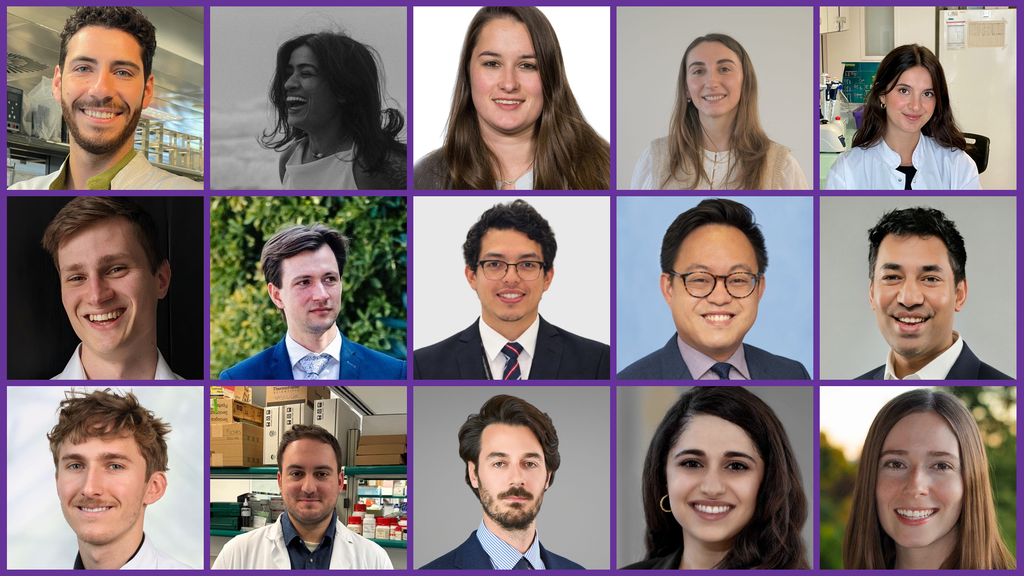
On the first day of Science in Spain, many early-career researchers were able to share their work. For one part of the conference, Chief Science Officer Dr. Josephine Grima wanted to turn the format around for the international symposium portion of Science in Spain to give students, trainees, and early-career researchers the opportunity to present their work while established experts listened from the audience.
A committee reviewed and ranked submitted abstracts, with the top 20 selected to receive $500 scholarships, primarily to help offset travel costs. Read About Next-Gen Researchers
For media inquiries, please contact Chief Communications, Marketing & Digital Officer for the Marfan Foundation, April Dawn Shinske at brandcomms@marfan.org
Advisory
The information shared in this post is provided solely for informational purposes and to highlight the impact of The Marfan Foundation’s research and global collaboration efforts. It is not medical advice or treatment guidance.
Research discussed during Science in Spain may represent preliminary or ongoing work, and some findings may not yet have been published, peer reviewed, replicated, or studied in humans. The presentation or discussion of research does not represent a recommendation or change in current standards of care, nor should conclusions be drawn about the safety, effectiveness, or appropriateness of any particular medication, treatment, or other intervention.
Community members should not start, stop, or change medications, treatments, or other aspects of their care based on information shared here. Always consult your expert healthcare providers regarding your individual care.
The purpose of bringing leading scientists together from around the world is to accelerate discovery and deepen understanding—creating the collaborations and knowledge that may ultimately lead to the next breakthroughs and improved care for our community.
Thank you to every member of the Marfan Foundation Family
Your support makes research progress possible.
Together, we are building a brighter future for everyone living with genetic aortic and vascular conditions.

The Marfan Foundation drives research, education and support – and builds community – to improve outcomes, save lives and empower all people to thrive who are living with Marfan, Loeys-Dietz, Vascular Ehlers-Danlos syndromes, and related genetic aortic and vascular conditions.