
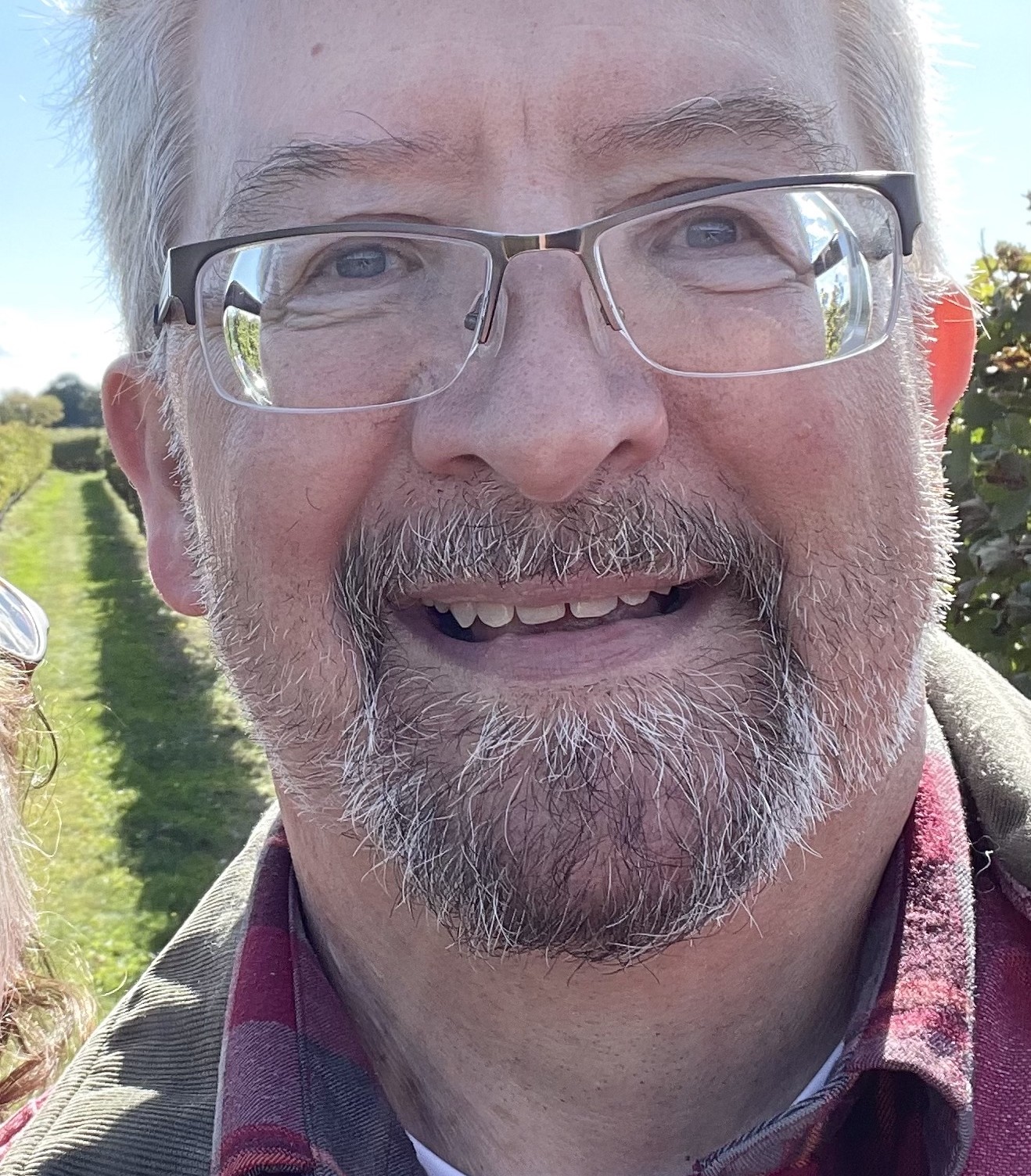
“I felt like Mike Tyson punched me in the chest. That’s the best way I can describe it,” says Chuck Dodds, 61, about the aortic aneurysm he had while taking a shower in April 2004. “Both arms went numb and tingling; I knew immediately it was something more than a heart attack.”
Paramedics quickly arrived and in the ambulance on the way to a hospital south of Boston, Chuck floated in and out of consciousness. “I had felt my aorta ripping all the way down, so I was trying to give my last will and testament to anyone who would listen,” he says. Chuck was soon airlifted to another hospital in Boston. There, he was rushed into surgery where doctors put a Dacron graft on his aorta. “When I woke up, I realized: I survived. I’m alive,” he says. “Theoretically, I should have been dead within the first 10 minutes. I had seven shredded arteries. But I was alive.”
Chuck went home and tried to resume his life with his wife and four-year-old daughter. He had been working as an oil burner technician at the time, but the company management was worried about him continuing to work such a physical job. “I had to agree with them. I was often picking up oil burners and lugging them around. So we worked out a settlement.”
Once his wife returned to work and his daughter was back at daycare, Chuck felt lost. “I was supposed to be going out for walks, but I was afraid to do it myself,” he says. Eventually my sister Anita encouraged me. “She said: ‘Chuckie, get up and get going – and do it now’. So I did..”
A month later Chuck heard from his medical team. “They said they thought my situation fell under the connective tissue umbrella. But that was all they had. It was the best they could do with a genetic test at that point.”
Chuck collected unemployment for a while and then trained for some office jobs, including one at Blue Cross Blue Shield, where he learned a lot about health insurance. But five years later the new valve had started to disintegrate and his aortic root was swelling. “The doctors thought I was headed for another aneurysm,” he says.
A second surgery, in 2009, to replace the valve ended up taking 19 hours. “My arteries kept collapsing and they had to take a section out of my leg to put in my heart and do a double bypass,” he says. “But this one is a plastic Saint Jude Medical valve and it’s supposed to be good for 20 to 30 years.”
This time a genetic test came back with a definitive answer: Loeys-Dietz syndrome. “I immediately started doing research, but there wasn’t that much out there. After all, this syndrome had just been discovered a few years earlier.”
Chuck thought back over his family history. His father’s youngest brother had an issue with a prominent area below his neck on his back. His father had “circulatory issues all over the place” and eventually had an experimental 9-inch stent put in his descending aorta before passing away in 2006. He also had a cousin on his mother’s side who had an abdominal aneurysm and spent a month in a coma. “If you looked at him, he had classic Marfan features. He was thin, lanky, double jointed, the whole nine yards.” It was theoretically possible he could have inherited a genetic aortic condition from either parent.
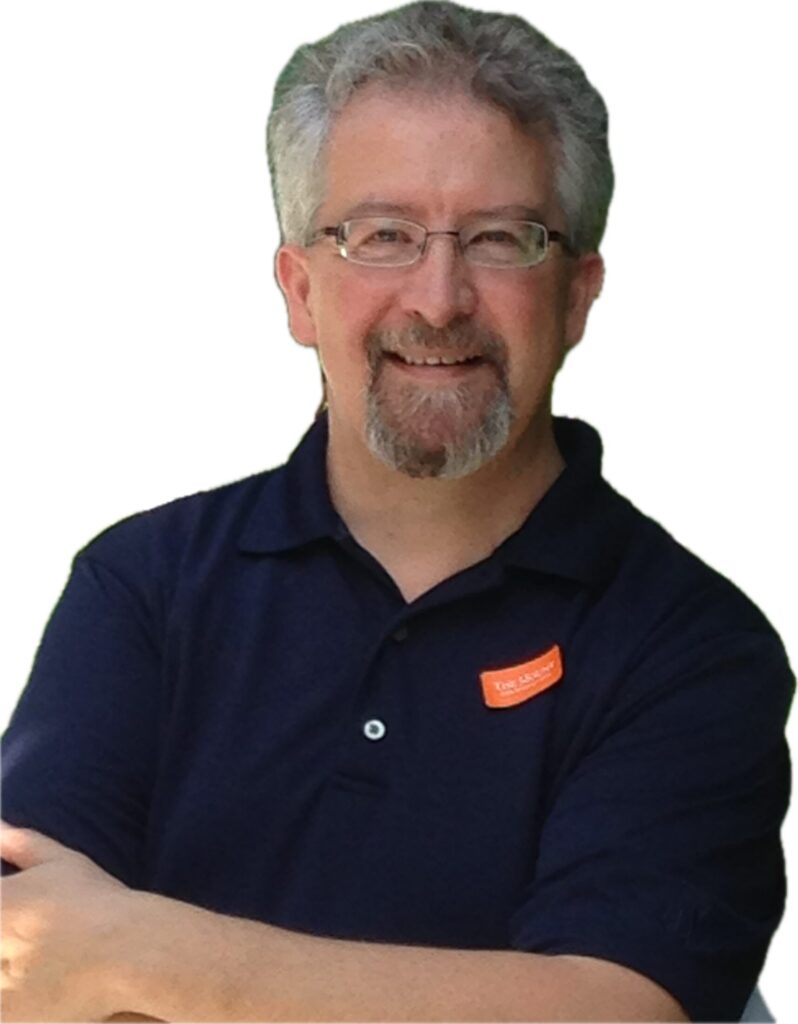
Three other telltale signs of Loeys-Dietz had also presented themselves throughout Chuck’s life. He was born with clubfeet, as a teenager he had retinal perforations, and he later developed a painful rigid hammertoe.
Then, several years after Chuck’s first life-saving operation, his sister, Janet, died of an aortic aneurysm. “Well, then there was just no more denying the family connection,” he says. “It’s there.”
Chuck says that he didn’t spend much time with “the woe is me stuff. I’ve had a great life and if I were to die tomorrow, I’m grateful for it,” he says. “I can tell you that pretty quickly I stopped taking things for granted.”
While Chuck was happy to finally get a diagnosis he admits that several family members are afraid to undergo genetic testing. Another sister has long had severe scoliosis, but “is now retired and happily traveling with her husband” and so far, is not interested in testing. His daughter, now 26, is also fearful of getting a diagnosis for reasons ranging from not being able to get life insurance to limiting employment possibilities.
Finding Hope in Helping
Mentoring youth, including some with LDS, is something that has been immensely gratifying to Chuck. “I’ve got a plethora of people who are now in their 30s that I kind of mentored. It wasn’t anything formal, just a kid here and a kid there. I encouraged them in various life things,” he says. “One of the kids that I mentored is now 28. He comes over to help me with the heavier yard work and things here at the house that I can’t do.”
He adds that he also speaks with parents after their child gets diagnosed with LDS. “Helping the parents help the kid is a good first step,” he says. “Many people are raised to think they can do anything they want. But as mature adults, we know that not everything’s going to work like that. So, you learn to adapt and overcome. Now you take this mentality back to some kid who has just gotten diagnosed with LDS.”
Chuck says that he is so appreciative of all the things he can do, from hunting expeditions in New England to travels with his family. “The fact that I could climb up a hill in Canada, north of Montreal, to go and see the changing of the guard in the summer. Or take a family shot in front of the ocean at Acadia National Park. I don’t take any of it for granted.”
Finding Ways to Thrive
Chuck has continued to face various health challenges. In 2021 he had a tendon “let go” in his left ankle and arch. Chuck says the tendon’s condition was deteriorated to a degree that doctors didn’t even to try to reattach it. In addition, they inserted four screws into his foot to form an arch. “I was always flat footed, I never had an arch. So I had to learn how to walk with this thing,” he says.
In 2023, Chuck was driving to watch a softball game when he suddenly realized something was wrong – he had no idea where he was. He somehow got himself to a hospital ER where he announced: “I think I’m having a stroke.” But it ended up he had fluid buildup on his brain and doctors inserted a permanent shunt on the outside of his skull to help drain the fluid.
Chuck first connected with the Marfan Foundation and its Loeys-Dietz syndrome division in 2024. His ultimate goal is twofold: He wants to learn more about what to expect as he ages and he wants to give back by supporting people living with LDS. He had previously participated in a research study with a doctor that he met at his church and is open to learning more. “I want to talk to the genetics people and see what the risk levels are for various things happening to me and to my daughter. I need the guys in the white smocks, the researchers, to tell me what to expect for life. And then I want to do everything I possibly can, not just on the research end of things, but socially and to help people cope psychologically.”
“There is an important thing I want you to understand. I’m not just a survivor; I don’t identify with that so much,” Chuck says. “I’m a thriver.”
The Loeys-Dietz Syndrome Foundation, a division of the Marfan Foundation, is here for people living with the condition during Loeys-Dietz Awareness Month and every day. Learn more at loeysdietz.org
Olivia Abel has been a strategic communications and editorial professional for more than 25 years. A passionate storyteller, she’s worked as a reporter at Vanity Fair and People magazines, written freelance business stories for The New York Times and spent a decade as Editor-in-Chief of Hudson Valley magazine. Olivia shares the stories of those affected by genetic aortic and vascular conditions in her current work as director of Integrated Marketing Communications at the Marfan Foundation.