
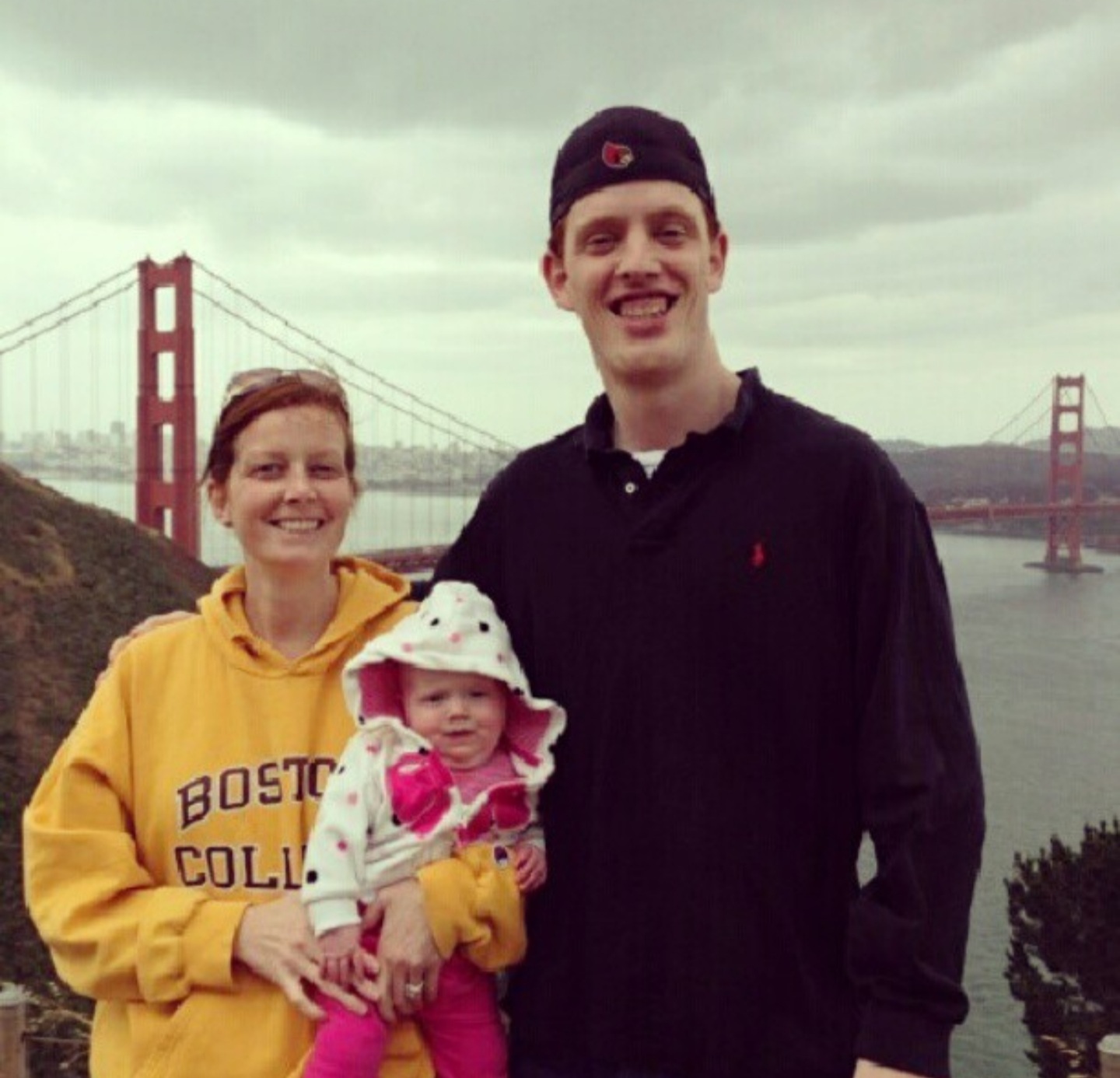
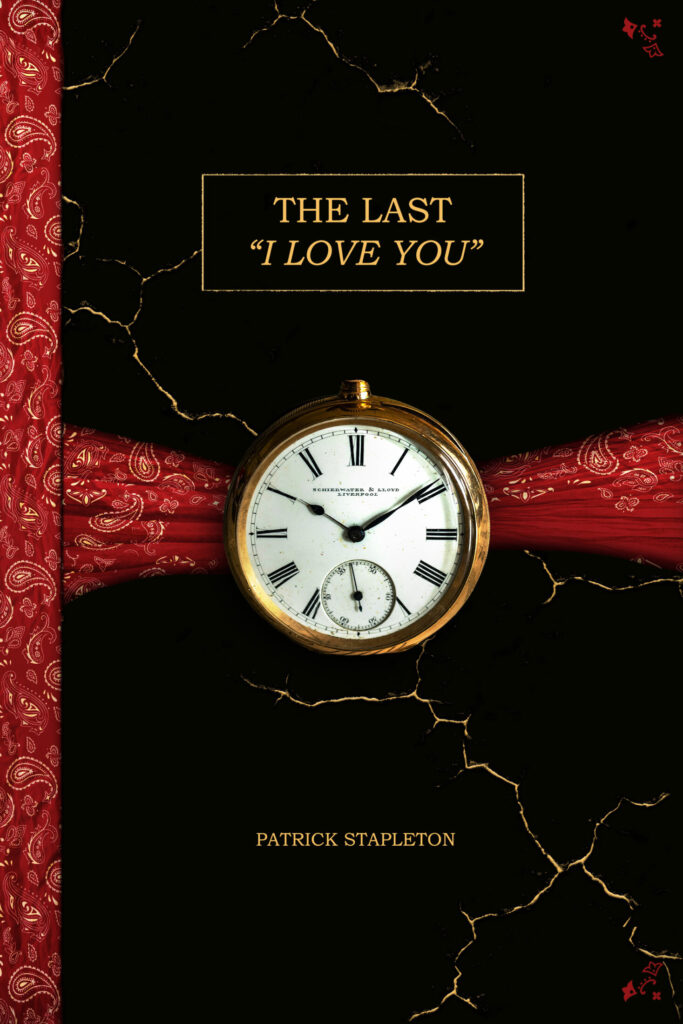
Patrick Stapleton’s debut novel honors his sister while raising awareness of the connective tissue condition.
Patrick Stapleton wrote his debut novel for one main reason: to honor his late sister, Danielle, who passed away suddenly in 2021.
Danielle Stapleton Richardson, MD, MPH, was a nocturnist — a hospitalist who works exclusively overnight — at Duke Regional Hospital when she passed away at age 41 from complications of Loeys-Dietz syndrome (LDS). She had been diagnosed with the connective tissue condition 15 years earlier.
“She was nine years older than me – almost like an aunt – and I looked up to her in so many ways. She was always there for me. A couple years before she passed, she told me that she was worried about me, that she didn’t think I was living up to my potential,” says Patrick, 37, who has an English degree from Catholic University and works at the Umstead Hotel and Spa in Cary, North Carolina.
The book, The Last I Love You, follows two sisters, Fia and Chelsea, whose close bond is tested by tragedy — and, unexpectedly, by the chance to go back and change what happened. Loeys-Dietz is woven into the story, too. One character lives with the physical and emotional complications of the condition, while another is named Dr. Danielle Richardson. “It’s only loosely based on her. But I wanted her name to live on,” he says.
Patrick believes that Danielle would not only be proud that he knuckled down and published a book, but would be excited that the novel has the potential to spread Loeys-Dietz awareness.
“Still, to this day, so few people have ever heard of Loeys-Dietz,” he says.
Patrick would also like to offer hope to those living with LDS, and their loved ones, by touting his sister’s “amazing and full life.”
“She packed so much into those 41 years. She got multiple degrees, became a caring doctor, was married with two kids,” he says. “She was the smartest person I ever met. It shows people who have LDS that you are not just your syndrome – that you can lead an amazing life, you can do anything. Danielle did not let LDS stop her.”
Patrick says that Danielle was diagnosed in 2006 after attending a medical training program the summer before she started medical school. “The students were listening to each other’s hearts with a stethoscope. But somebody heard something a little funky in Danielle’s heart – and that set off a chain reaction that eventually led to her getting tested and diagnosed.”
It also led to surgery that same year to replace her aortic valve. Patrick says she recovered well and continued with her busy life.
In spring 2021, however, Danielle began feeling sick. “She was extremely nauseous,” says Patrick. Doctors determined that the valve was failing and that she needed immediate surgery to replace it with a mechanical valve. According to Patrick, the surgery went well, and after an eight-day hospital stay, Danielle went home. But two days after being discharged, she suffered a pulmonary embolism and passed away.
“She came out of the bathroom and collapsed,” he says. “But she was able to call 911—she was a fighter until the last second.”
Patrick, his parents, and two of his three other siblings had all followed Danielle to the Raleigh area after she began working at Duke, creating a family hub. “She loved to help people and loved her job there,” says Patrick who adds that he is happy to live near the Duke Center for Aortic Disease which provides specialized surgical care, ongoing research, and comprehensive management for patients with LDS and other genetic aortic conditions. The Center, along with Duke Heart, also sponsors the Marfan Foundation’s North Carolina Walk for Victory each April.
“Whether through books, articles, art, or advocacy, raising awareness can help change the story for people living with Loeys-Dietz and other genetic aortic and vascular conditions,” says Stacey Watson, Director of Loeys-Dietz and Marfan at the Marfan Foundation.
Adds Patrick: “I want to raise money and awareness. LDS took my sister, but I don’t want other families to have to go through this.”
Olivia Abel has been a strategic communications and editorial professional for more than 25 years. A passionate storyteller, she’s worked as a reporter at Vanity Fair and People magazines, written freelance business stories for The New York Times and spent a decade as Editor-in-Chief of Hudson Valley magazine. Olivia shares the stories of those affected by genetic aortic and vascular conditions in her current work as director of Integrated Marketing Communications at the Marfan Foundation.