

For families navigating life with a genetic aortic and vascular condition, the move from pediatric to adult care can feel like a mixed milestone. The transition often marks the first time a young person is expected to take primary responsibility for their health by managing appointments, medications, and decisions that were once made by parents/caregivers and a familiar pediatric healthcare team.
“Transitioning to adult care is a process, not a one-time event,” said Ashley Neal, MD, MEd, a pediatric cardiologist who works alongside Alissa Meek, RN, BSN, CPN, to help patients take those steps at the Marfan and Aortic Disease Clinic at Cincinnati Children’s Hospital Medical Center.
“Our goal is to help adolescents move from a dependent role in their healthcare to one of independence at a pace that matches their abilities.”
What Transition Really Means
At its core, transitioning to adult care is about building confidence and capability. It’s the gradual shift from parent-led care to a young adult who understands their condition, manages medications, communicates with providers, and makes informed decisions.
“We’re not expecting perfection,” Alissa explained. “We’re helping patients build skills gradually, so they feel prepared, and not overwhelmed, when they enter adult care. We are also supporting parents through this change. Transition is not phasing parents out—it’s inviting teens to take a more active, shared role in their own care.”
Programs like the one at Cincinnati Children’s clinic take a multidisciplinary approach, offering education, coordination, and clinical support tailored to each patient. The emphasis is on meeting teens where they are and helping them grow from there.
Starting Early is Key
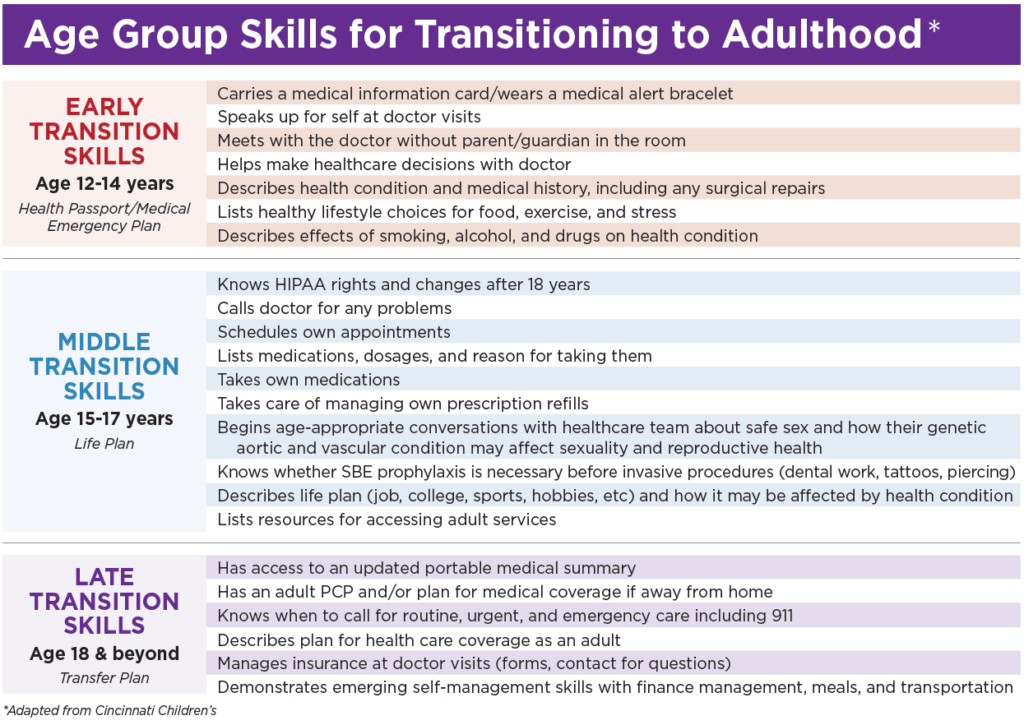
One of the most important takeaways: transition begins earlier than many families expect. The adolescent checklist (see the Age Group Skills for Transitioning to Adulthood chart) outlines how skills build over time.
Ages 12–14: Learning the basics—understanding their condition, speaking up during appointments, and beginning to participate in decision-making
Ages 15–17: Taking on more responsibility—managing medications, scheduling appointments, and understanding how genetic aortic conditions may impact life choices
18 and beyond: Preparing for full independence— navigating insurance, maintaining a portable medical summary, and establishing adult care providers
This gradual approach helps establish independence and reduces the “cliff effect” many families experience when pediatric care ends.
Using Tools for Evaluation
A key tool the Cincinnati Children’s team uses in this process is the validated Transition Readiness Assessment Questionnaire (TRAQ). Rather than testing knowledge, TRAQ evaluates teens’ readiness to learn real-world skills necessary for lifelong medical follow-up like managing medications, scheduling appointments, and responding to emergencies.
The answers provide the team with an understanding of where a teen is in the transition process and what skills need to be strengthened.
The experts stress there are no right or wrong answers, and there is no one-size-fits-all approach. “This isn’t about passing or failing,” Dr. Neal said. “It’s about understanding where a patient is today so we can support what comes next.”
Building Skills Between Visits
Transition doesn’t just happen in the clinic. Some of the most meaningful growth happens in everyday life. Families can support independence by gradually shifting responsibility in areas like:
- Taking medication consistently
- Scheduling and attending appointments
- Communicating symptoms or concerns
- Understanding when to seek urgent or emergency care
Even a small step like having a teen speak during an appointment can build confidence over time.
“Promoting collaboration with the medical team is essential,” said Alissa. “We want teens to feel like active participants in their care, not just observers.”
Tools That Can Make a Difference
There are a few simple tools that the experts at Cincinnati Children’s recommend that can have a big impact on readiness and help with a smoother transition. These include:
- Medical ID apps or bracelets that ensure critical information is accessible in emergencies
- A portable medical summary that helps young adults communicate their history clearly, such as a wallet-sized card that can be kept in a wallet, purse, or backpack (it can be generated online and downloaded for free)
- Patient portals like MyChart that support direct communication and appointment management
Addressing the Emotional Side
While much of a transition focuses on skills, the emotional shift can be just as significant for both teens and parents. Letting go of control can be difficult, as can stepping into responsibility.
“Transitioning is a team effort between the teen, parent, healthcare team, and others,” said Dr. Neal. “Everyone plays a role.”
According to Alissa, it’s okay not to have all the answers right away. “No one expects teens to have everything figured out—and they don’t need to. Adulthood is something we grow into. With support and practice, we all find our footing.”
Finding Empowerment Along the Way
For families in the Marfan, Loeys-Dietz, VEDS, Stickler, and related conditions community, transitioning to adulthood is more than a handoff between providers. It’s a journey toward independence, confidence, and lifelong self-advocacy.
With the right tools, guidance, and support, that journey doesn’t have to feel overwhelming. Instead, it can be empowering.
(insert chart)
A Patient Perspective on the Transition to Adult Care
“The transition was so smooth, I didn’t even notice.”

“One of the greatest things about being a patient at Cincinnati Children’s is how seamless the transition to adult care felt. I didn’t even notice it was happening. I was diagnosed with Loeys-Dietz at 19, and while that was a difficult time, my care team made it easier.
Being open-minded made a big difference. I wanted to learn everything I could about my condition, how my body works, and how to take care of myself. I’ve also been open with my friends, and that support has meant so much.
If you do have to transition to a new care team, it helps to stay open and remember you’re still the same person, and you’ll continue to get the support you need.
For parents, I think it’s important to share information as your child grows. Knowledge is power. Understanding my condition has made me feel stronger and more confident in managing my health.”
~ Colette Wagner

Susan Benvenuti is the VP, Integrated Marketing & Communications for The Marfan Foundation. She enjoys getting to know community members and sharing their unique stories. If you would like to share yours, we’d love to hear from you - get started by emailing sbenvenuti@marfan.org.