

From European fundraising marathons to major international meetings, we’re advancing research and expanding access to care.
Julie De Backer, MD, PhD, a genetic cardiologist and professor at Ghent University in Belgium and recipient of a team Everest Award from the Marfan Foundation, has focused on Marfan syndrome and related conditions for decades, combining research with patient care. One thing that has helped her career, and ultimately her ability to support her patients, is attending in-person scientific meetings.
“Networking at these meetings is sometimes more important than the actual meeting,” says Dr. DeBacker.
She recalls as a young PhD student meeting Marfan Foundation-funded researcher and Professional Advisory Board member Dr. Hal Dietz. “It was so nice to meet in person the people you read about in papers,” she said. “Meeting these experts in real life is very different—it is very inspiring.”
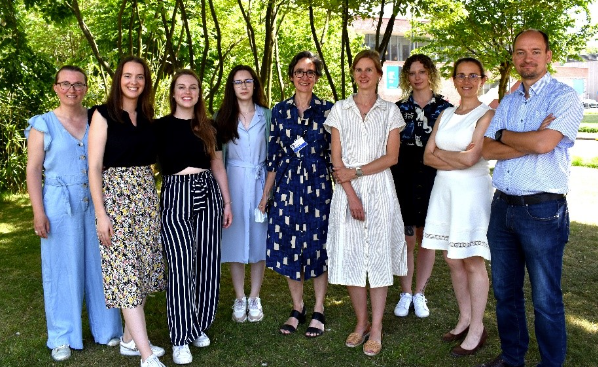
“Being able to bounce ideas around with people from other countries” has helped Dr. DeBacker move her research forward and identify new opportunities for funding or partnerships. “Sometimes you learn one little thing that can change everything.”
Dr. De Backer also emphasized the importance of encouraging the next generation of researchers. “Stimulating young people to go into research is a challenge,” she said. “Major international conferences excite people.”
Dr. DeBacker is looking forward to attending Science in Spain, a major international meeting focused on aortic disease taking place in Barcelona October 4–7, 2026.
Josephine Grima, PhD, the Marfan Foundation’s Chief Science Officer, helped organize the meeting and notes that it is expected to draw many of the world’s leading scientists, clinicians, and researchers. “It’s a great opportunity to connect the research and clinical sides of the field,” she says.
The event includes two meetings combined into one scientific get-together: The 12th International Symposium on Marfan, Loeys-Dietz, Vascular Ehlers-Danlos, and Related Syndromes, and another joint session with the Genetic Aortic Network and the European Society of Cardiology (ESC).
Dr. Grima is excited about the new collaboration with ESC. “We have a lot of Marfan clinics and collaborators in Spain. We’re being hosted by Drs. Gisela Teixidó Turà, MD, and Artur Evangelista, MD. Dr. Evanagelista is one of the most renowned cardiologists in Europe. He is a great guy, Barcelona is a beautiful city, and it’s a wonderful opportunity all around.”
Two days will focus on basic and translational science, while two days will be dedicated to clinical management and registry studies. The program will also offer opportunities to learn about the latest advances and controversies while fostering collaboration among leading aortic disease professionals.
“It’s important for people to discuss research trends and directives and to debate clinical management in order to achieve better patient outcomes,” says Dr. Grima, noting that travel awards are available for trainees. “It’s also a great way to bring together young investigators and post-docs with senior scientists and clinicians to establish collaborations and support career development in this field.”
Building a Connected Community, Enabling Access to Health Information Globally
The goal is not only to accelerate the pace of research – and ultimately to find a cure– but also to expand access to care for people living with Marfan and related conditions. Where someone lives can shape how quickly they are diagnosed, the care they receive, and the support they can access. In many parts of the world, barriers, including language differences, continue to make navigating critical health information a challenge.
The Foundation recently launched a series of webinars designed for audiences in Australia and New Zealand, beginning with a session on “Aortic Emergencies” led by regional medical experts. Staff have also participated in major international meetings in Dubai, Naples (Italy) and Leicester, continuing to build relationships with partners such as the Marfan Trust in the United Kingdom.
The Foundation hosts international symposiums for individuals and families, bringing people together to share their lived experiences, learn from one another, and connect with experts in the field.
On April 18, for the first time, the Marfan Foundation hosted a free Italian-language virtual symposium. The program focused on Marfan, Loeys-Dietz, VEDS, and Stickler syndromes, with expert-led sessions designed to provide education and support.
For Clotilde Recchia, 54, the event reflected the kind of connection she finds invaluable. Diagnosed at age 14 after a lens dislocation, she first reached out to the Italian Marfan Syndrome Association nearly three decades ago.
“The Association helped me a great deal,” she said. “I met other patients there, and many have become close friends. They are an important source of support in my life.”
Now vice president of the organization, Recchia volunteered to help plan the symposium.
“The Marfan Foundation is the most important global point of reference for patients with Marfan syndrome,” she said. “This was a unique opportunity to bring together doctors, patients, and different associations. Connecting with other patients is very important, and the exchange among doctors—and between doctors and patients—is essential.”
Roberta Tomassetti, who currently works in occupational medicine in France, attended the symposium. “Every day I try to bring awareness to these conditions. Talking about Loeys-Dietz syndrome is, for me, a concrete way to transform pain into commitment and responsibility. A heartfelt thank you to the Marfan Foundation for the impeccable organization and content of the highest level.”
London: Learning Together
The Second International Symposium in London, taking place Oct. 10, will once again focus on quality of life for those with Marfan, Loeys-Dietz, VEDS, and—for the first time—Stickler syndrome.
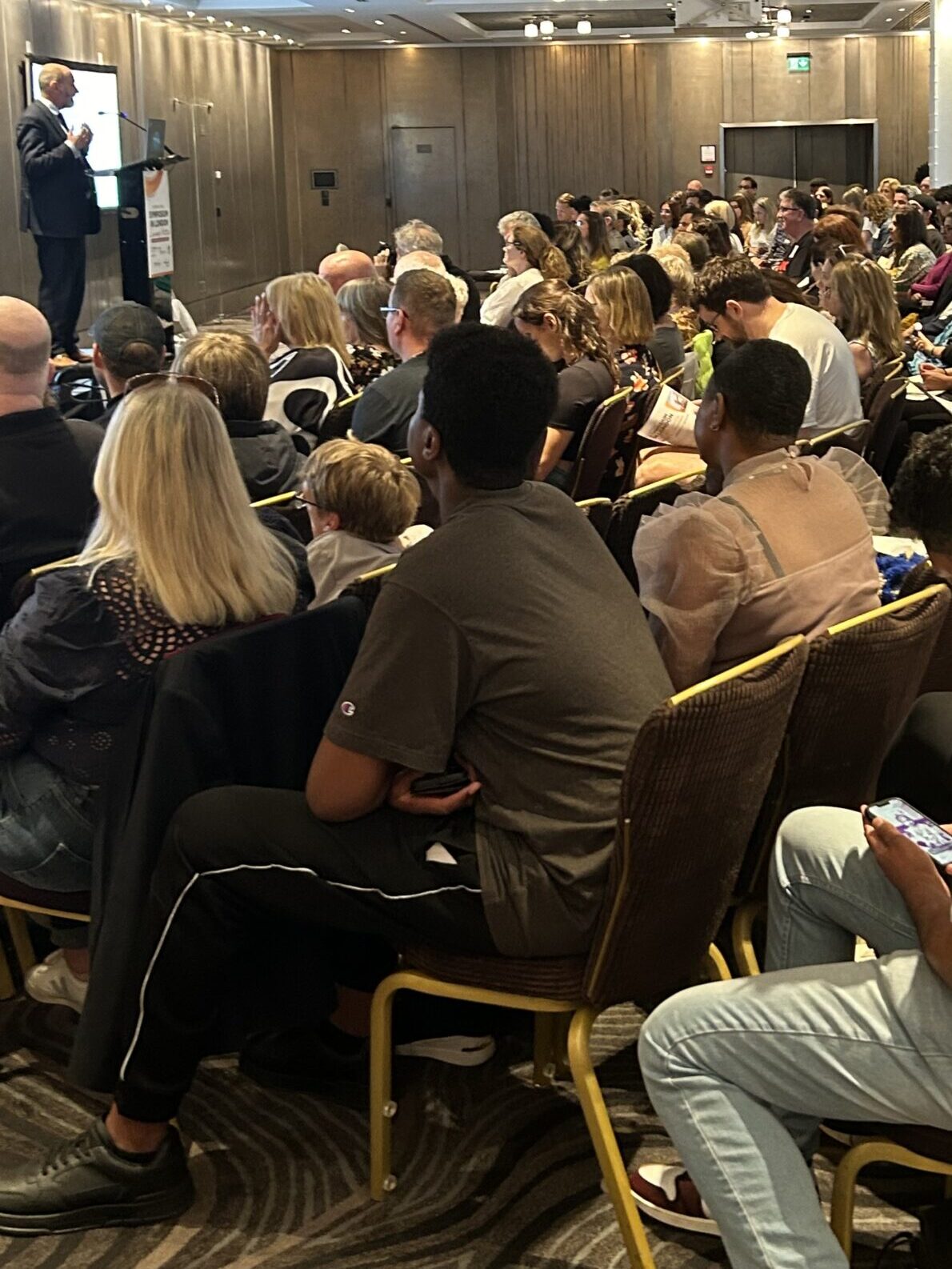
A collaboration between the Foundation and several UK organizations—including the Marfan Trust, Annabelle’s Challenge, the Aortic Disorder Charitable Trust, and Stickler Syndrome UK—the program will feature both general sessions and condition-specific breakout groups. Childcare and onsite activities will be available for children ages 5–12.
Spanish-Language Outreach
In January, the Foundation hosted its fifth annual Spanish-Language Summit, drawing more than 270 participants from around the world.
Reflecting on the summit’s continued growth, Marfan Foundation Board Chair Bert Medina, noted, “Being able to hear medical information in our native language is an essential part of gaining the tools necessary to enjoy optimal health while living with a genetic aortic and vascular condition.”
Presented entirely in Spanish, sessions in the 2.5-hour event covered advances in research, genetics and family planning, and daily life with a connective tissue condition. This year, it also laser focused on five countries—Spain, Mexico, Colombia, Chile, and Argentina—and gave attendees practical guidance on how to access specialized care in their home countries.
“Providing up-to-date information on the conditions is only one part of the equation. We are also mindful that we need to empower people with the tools to help them get expert medical care,” says Eileen Novins, the Foundation’s Chief Global Business Development Officer. “Through our international network of physicians, we have been successful in getting them connected with local doctors in many parts of the world.”
Expanding Access Across Languages
The Foundation has continued to deepen its commitment to serving Spanish-speaking communities, domestically and internationally.
On October 3, the Foundation will hold its first International Symposium: Living with Marfan, Loeys-Dietz, VEDS, and Stickler in Barcelona, Spain. Medical experts from the US and Spain will share the spotlight, giving presentations and leading breakout sessions fully in Spanish. The Foundation is proud to bring this program to Spain in conjunction with SIMA, the Spanish Marfan Foundation.
Closer to home, as part of its recent brand refresh, a new Spanish-language logo was introduced, alongside a Spanish-language digital newsletter that provides information and updates.
The Foundation has also expanded opportunities for connection through a dedicated Spanish-language support group, which has drawn 44 participants from across Latin America and beyond—including Spain, Mexico, Peru, Guatemala, Costa Rica, Cuba, Venezuela, and Colombia.
The organization has significantly broadened its multilingual reach. In the past two years, it expanded its website from 11 available languages to more than 25, making essential information accessible to a far wider global audience.
Today, resources are also available in languages including Afrikaans, Arabic, Bengali, Catalan, Chinese, Danish, Filipino, Hebrew, Latvian, Norwegian, Polish, Russian, Slovak, Slovenian, Turkish, and Ukrainian—helping more individuals and families access reliable information in the language they know best.
Running For Victory Around the Globe:
The Marfan Foundation reached a new milestone last year with its first-ever international marathon team at the BMW Berlin Marathon, where three runners raised more than $10,600 in support of its mission.
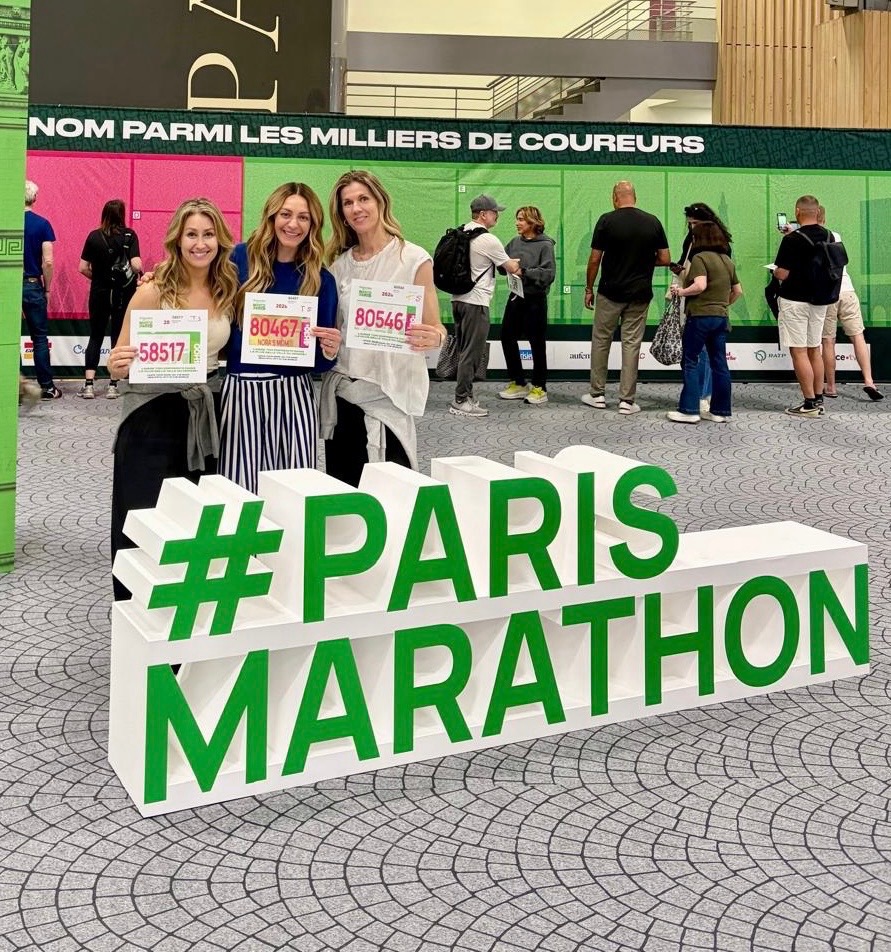
At the April 12 Schneider Electric Paris Marathon, 13 runners—all women—represented the Foundation and raised $50,000 in the process.
Among them was Robyn Goodman Li, who also ran in Berlin on behalf of her two sons. “The only thing that motivated me enough to actually run the Berlin marathon was doing it for the Marfan Foundation,” she said. “When I hit the wall around mile 21, I reminded myself that those affected by these conditions endure so much more than I ever could.”
Goodman Li called the Paris race “amazing. It was a very special experience. It’s a beautiful course, through parks, the city streets, these amazing tunnels, and then you’re running by the Eiffel Tower and finishing at the Arc de Triomphe,” she says. “But the best part was meeting the other women on the team. We went on a fun cruise on the Seine the day before the Marathon. We’re all running for the same reason, so we really get each other. It creates a really strong bond.”
These events not only carry deep personal meaning for participants but also help raise awareness and extend the Foundation’s reach in communities around the world.
Olivia Abel has been a strategic communications and editorial professional for more than 25 years. A passionate storyteller, she’s worked as a reporter at Vanity Fair and People magazines, written freelance business stories for The New York Times and spent a decade as Editor-in-Chief of Hudson Valley magazine. Olivia shares the stories of those affected by genetic aortic and vascular conditions in her current work as director of Integrated Marketing Communications at the Marfan Foundation.